
Irwin County Criminal Docket Searches
Felony files live in Superior Court. Georgia Courts offers an E-Access to Court Records directory that lists Irwin Superior and points searchers to PeachCourt. An account is required, per the state directory. If the online route does not surface the file you need, call Melissa Drawdy's Superior and Juvenile Court clerk office. The current GSCCCA directory lists Suite 103, 301 South Irwin Avenue, Ocilla, Georgia 31774. Phone 229-468-5356. Weekday hours are 8:30 a.m. to 5:00 p.m. Confirm those details before relying on them. The older county page still names the former clerk.
Gather the basics before you search. A likely court, a case number, and the party name all help. An approximate filing or hearing date helps too. No public source publishes Irwin's criminal case number format, so avoid guessing a prefix. For a Magistrate warrant or preliminary matter, call the Magistrate office directly. Do not treat its nCourt filing gateway as a search tool. Ocilla ordinance and city citations go through the Municipal Court clerk at City Hall. A written request to the office that holds the record also works under Georgia's Open Records guidance.
- Use Georgia E-Access to select the Irwin Superior listing and follow its PeachCourt link.
- Create or sign in to the required PeachCourt account, then search with the official fields the portal provides.
- Match the court, case caption, and dates before treating a result as the intended case.
- Read charges, settings, motions, orders, and disposition as separate docket events.
- Ask the responsible clerk for inspection, an ordinary copy, or a certified copy when the portal is incomplete.
PeachCourt and Irwin Criminal Files
PeachCourt wears two hats for Irwin Superior. It is the mandatory e-filing provider. It is also the e-access destination Georgia Courts names. Neither role means every paper gets accepted. Nor does it promise that every file is public or every image downloads free. Filing means the clerk or an authorized provider accepted the document. A mere upload attempt proves nothing more. Registration is described as free, though access can still carry account, document, or service terms.
Expect a limited view before you sign in. The login screens do not show the full Irwin County criminal docket field set in advance. Use the portal for what it lawfully presents, and ask the clerk about anything missing. The separate Tifton Judicial Circuit calendar can confirm a public setting. Remember it is a four-county hearing calendar, not the full file.
Criminal Dockets: What They Show
Entries run by date in an Irwin County criminal docket. A record may identify the court and division, case number and caption, charging instrument, settings, motions, orders, continuances, plea, trial, sentence, disposition, appeal notice, and whether a document is public, redacted, sealed, or simply unavailable online. Labels come straight from the court. No local code legend exists. Take an unfamiliar abbreviation to the clerk instead of guessing at it.
| Case number | The court-assigned identifier, shown here only as court-issued number because no verified Irwin format was found. |
|---|---|
| Charge | The alleged offense and whether the charging paper is an indictment, accusation, or complaint. |
| Setting | An arraignment, preliminary, pretrial, plea, trial, sentencing, or other scheduled hearing. |
| Orders and motions | Requests made to the court and the judge's separate rulings on those requests. |
| Disposition | The recorded resolution, such as dismissal, plea, adjudication, judgment, or transfer. |
A filing line does not prove the judge granted the request. A charge, arrest, indictment, warrant, or bond entry does not prove guilt either. For how the case actually resolved, read the disposition and the signed orders.
Reading Irwin Criminal Docket Terms
Georgia uses several terms for different stages. Confusing them causes real reading errors. An indictment is a grand-jury charging document generally tied to felony prosecution. An accusation is a prosecutor-filed charging document used in eligible criminal matters. Arraignment is the proceeding where the charge is stated. The accused responds there. A preliminary hearing tests probable cause or related early issues, not guilt.
- Warrant
- Judicial authority for an arrest, search, or another specified act, not a final judgment.
- Bond or bail
- A release or security decision, not a conviction or disposition.
- Continuance
- A postponement or reset that changes a setting but does not end the case.
- Disposition
- The docket's stated procedural outcome, which must be read exactly as entered.
Criminal Case Stages on the Docket
A Superior Court criminal file rarely follows one straight line. Its dated entries tend to tell a story. The charging paper opens the formal court record. Then comes arraignment or another response stage. Pretrial motions, bond questions, discovery filings, and continuances can add many entries before a plea or trial. Read orders separately from motions, since a request alone is not a result.
Docket flow: Filing › Arraignment › Pretrial › Plea or Trial › Disposition › Sentencing
Some matters start with Magistrate Court warrant or preliminary functions. They can later move up to Superior Court. That does not make the Magistrate gateway a mirror of the Superior docket. A date listed without a final disposition tells you only that an event was set or recorded. Check current status through PeachCourt or the clerk.
Irwin Dockets and Tifton Drug Court
The Tifton Circuit Drug Court entry lists Tift, Irwin, and Worth counties as the program's service area. It dates implementation to January 2017. It is an accountability court inside the broader criminal system. Not a new county court. Not an open roster of participants either. Any docket entries tied to the program follow the court's own record and access rules.
To find similar programs elsewhere, the Accountability Court directory offers filters. Sort by court type and county.
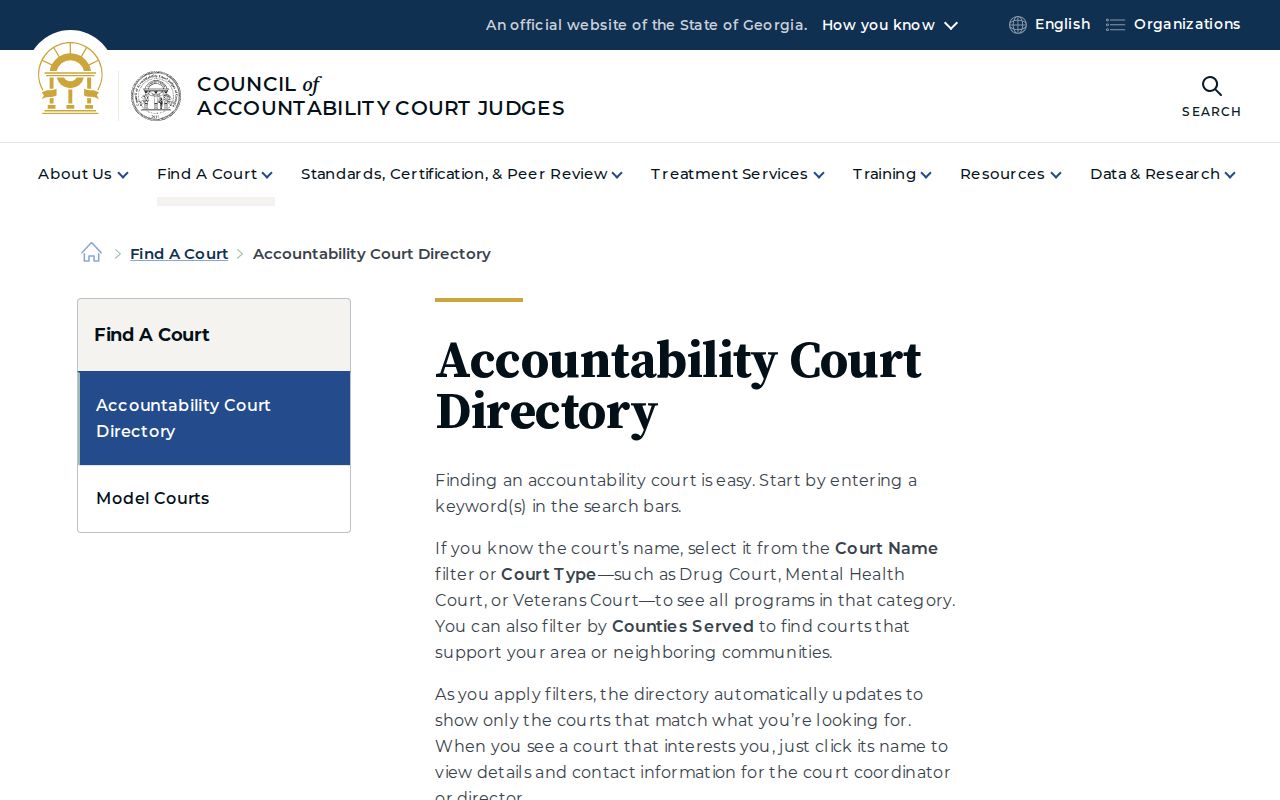
Start with the county-served filter, not the courthouse name. A program named for Tifton can still serve Irwin County, and the directory makes that plain. The program's own detail page goes further, naming its judges and coordinator.
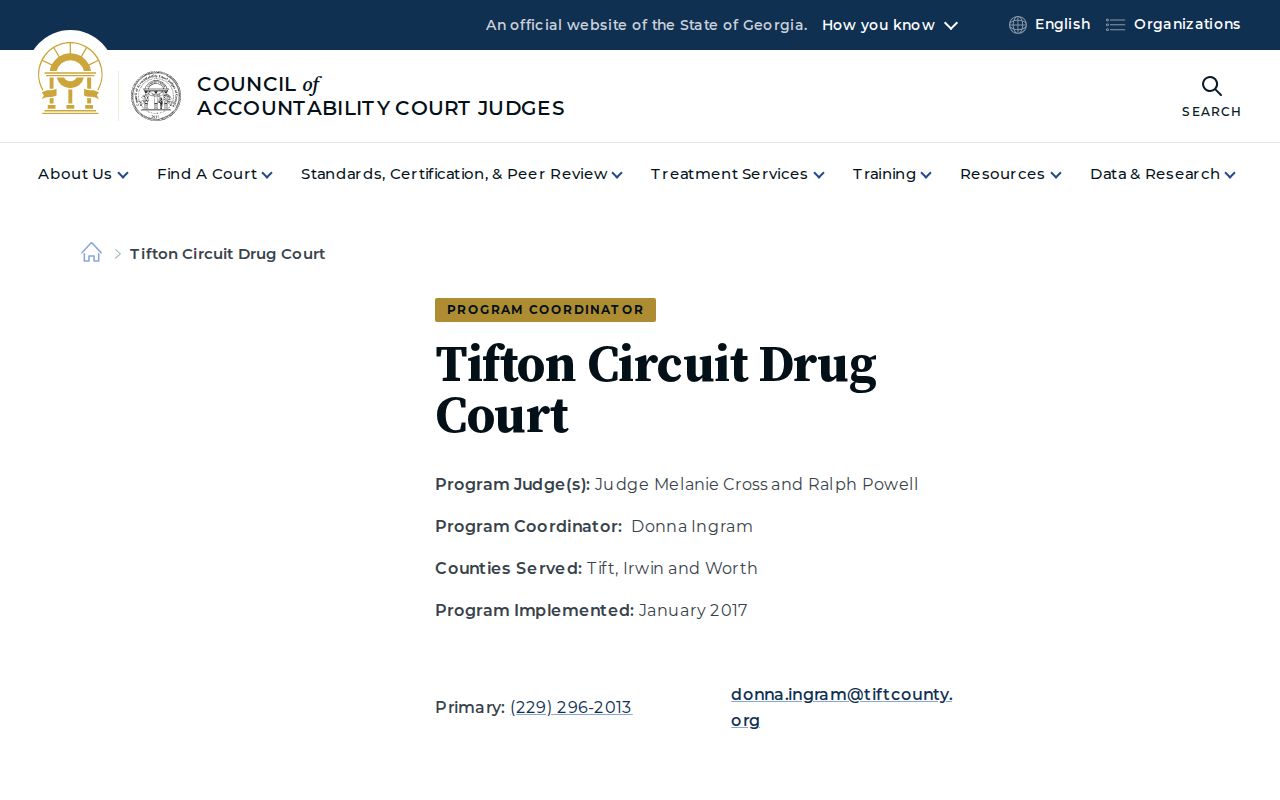
The listing confirms the Irwin service area. Individual participant information stays out of this public navigation resource.
Irwin County Criminal Docket Courts
Criminal work in Irwin County splits across several courts. Superior Court of Irwin County sits in the Tifton Judicial Circuit and holds the felony trials, and its criminal case records live with the elected Superior and Juvenile clerk. Magistrate Court handles warrants and other preliminary criminal functions. Probate Court may pick up traffic and certain misdemeanor work in a county without State Court, so confirm the exact venue from your citation or court paperwork. Ocilla Municipal Court covers city ordinance and traffic matters under municipal jurisdiction.
Juvenile Court takes delinquency, dependency, CHINS, and juvenile traffic cases under special access rules. The official directories list no Irwin State Court. That absence matters: a neighboring county's State Court listing is not an Irwin County criminal docket. Route by the court named on the paper, not by a general belief that every Georgia county has State Court.
Juvenile Forms Are Not Adult Dockets
The Georgia Supreme Court's Juvenile Court standard forms cover complaints, detention, dependency, access, recording devices, and hearing closure. The forms explain procedure. They do not create a public child-name search. Juvenile files and law-enforcement records carry protections far different from adult criminal records.
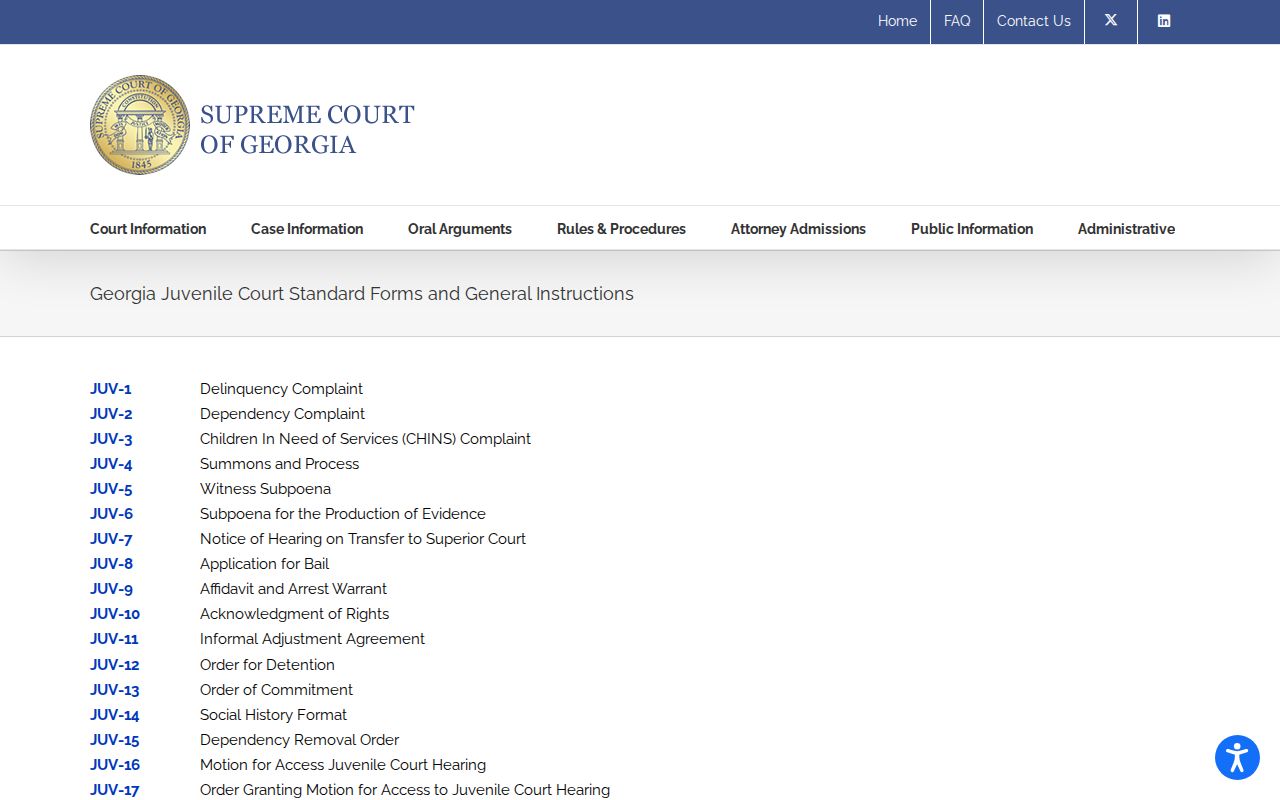
Access and closure run through formal requests and orders. An unrestricted adult docket lookup is not how those questions get answered.
A legislative text of O.C.G.A. section 15-11-708 treats child law-enforcement files as separate from adult arrest records and generally closed to public inspection, subject to stated exceptions or court order. That legislative PDF is older. Confirm the current code text before quoting it. Never publish a child's name, school, birth date, address, social history, or dependency facts pulled from an Irwin County criminal docket search.
When an Irwin Case Is Missing
A case missing from the Tifton calendar is not necessarily absent, dismissed, or sealed. The calendar shows hearings and daily schedules. The docket shows the wider filing history. Check first that the Irwin County filter, date, and judge filter are set correctly. Then try the state-listed PeachCourt route. Still nothing? Contact the Superior clerk with the court, case number or caption, date range, and the document type you want.
For Magistrate, Probate, Municipal, or Juvenile matters, contact that separate custodian. Ask by name for inspection, an ordinary copy, or a certified copy. A written request should seek an existing record, not ask the office to build a criminal-history report or compilation.
Access Rules for Criminal Dockets
Uniform Superior Court Rule 21 starts from public inspection of court records unless law or procedure limits access. That baseline does not erase sealing orders, redaction requirements, or juvenile restrictions. Rule 21.6 addresses protected identifiers and certain protective-order information. So a public docket may list that a paper was filed while the document itself sits redacted, sealed, or unavailable online.
Key rules:
Uniform Superior Court Rule 21 sets the public-access baseline and the process for limiting access.
Georgia rule amendments identify later effective changes that should be checked before relying on a saved rule copy.
Georgia Open Records guidance recommends a precise written request to the office that maintains the existing record.
The amendments source provides the date trail for checking whether a rule has changed.
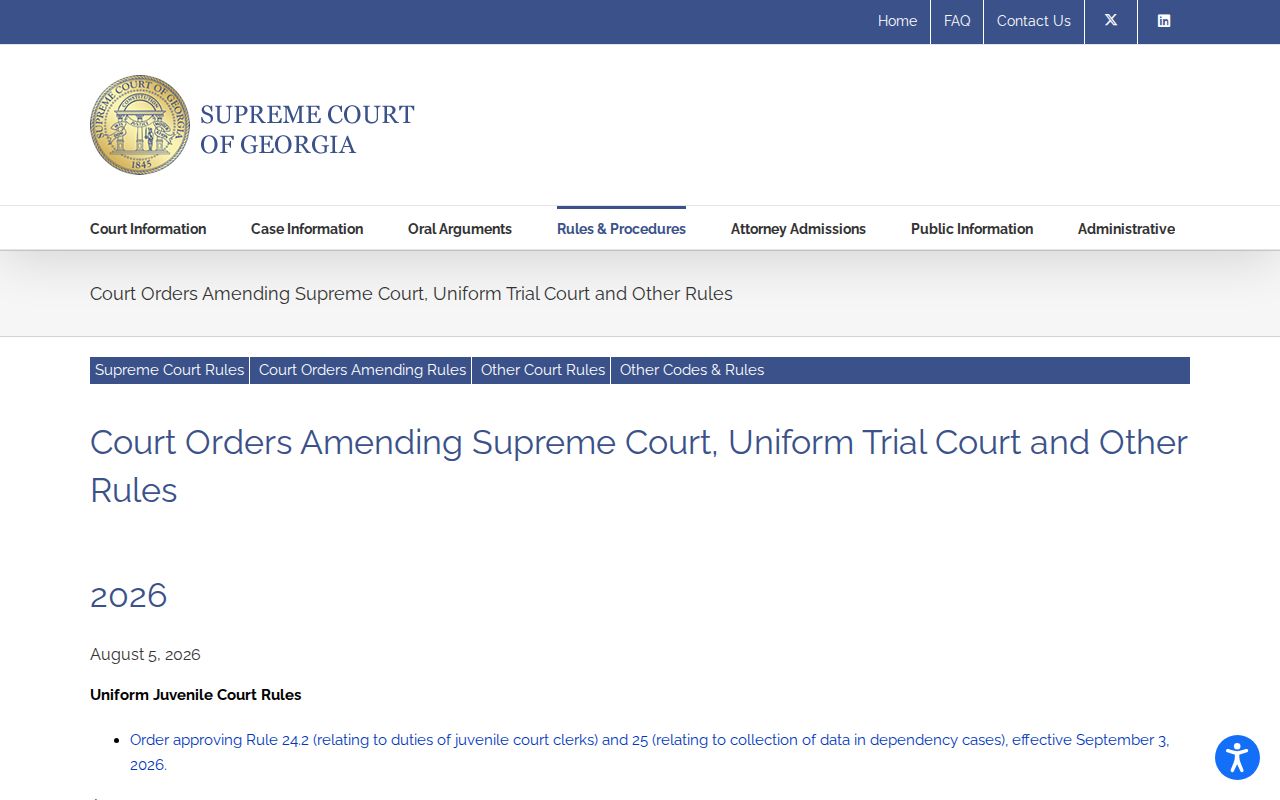
This dated amendment list is a reminder: pair any downloaded rule with the current official update page.